

A rug can completely change how a room feels. It can make a space feel finished, grounded, and intentional—or awkward and disconnected if it’s not quite right. The good news? Decorating with rugs doesn’t have to be complicated or expensive. With a few smart choices, you can use rugs to anchor your space and pull everything together in a way that feels effortless and cozy.
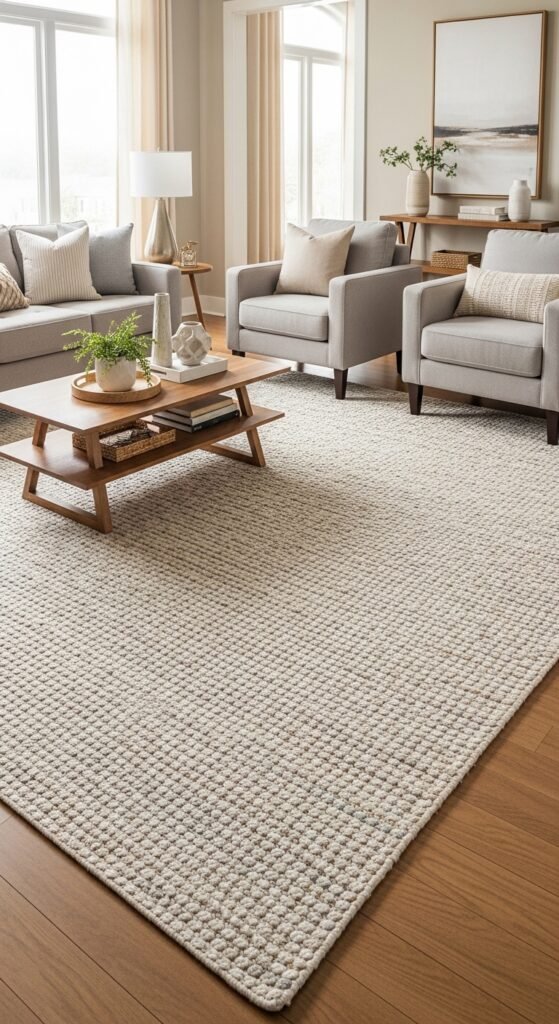
[Image Prompt] A bright living room with a neutral area rug centered under a sofa and coffee table, soft daylight coming through large windows, layered throw pillows, and natural textures photographed in a Pinterest-style home interior.
Start With the Right Size (This Matters More Than You Think)
The biggest rug mistake people make is choosing one that’s too small. A rug should ground your furniture, not float awkwardly in the middle of the room.
Here’s a simple rule of thumb:
- In living rooms, the front legs of sofas and chairs should sit on the rug.
- In dining rooms, the rug should extend beyond the table so chairs stay on it when pulled out.
- In bedrooms, aim for a rug that reaches at least halfway under the bed.
If you’re between sizes, go bigger. A larger rug makes a room feel more open and intentional, while a small rug can visually shrink the space.
Choose a Rug That Matches the Mood of the Room
Rugs do more than cover floors—they set the tone. Think about how you want the space to feel before choosing a pattern or texture.
For a calm, cozy vibe:
- Neutral tones
- Soft textures like wool or cotton
- Subtle patterns
For a bold, energetic look:
- Geometric or vintage-inspired patterns
- Rich colors
- High-contrast designs
Your rug doesn’t need to match everything perfectly. Instead, it should connect the dots between furniture, wall color, and accents.
Use Rugs to Define Areas in Open Spaces
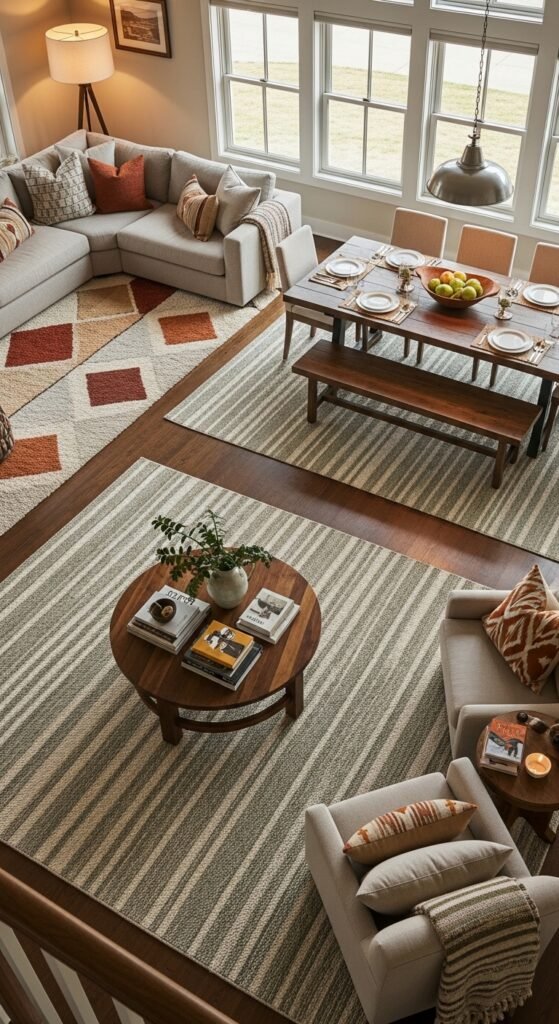
In open-concept homes, rugs are your secret weapon. They help define zones without walls.
Try this approach:
- One rug under the seating area
- A different rug under the dining space
- Keep color tones complementary so the areas feel connected
This trick works especially well in apartments or large rooms where everything blends together. A rug tells the eye, “This is where this space begins.”
Layer Rugs for Depth and Personality
Layering rugs is an easy way to add texture and personality—especially if you’re working with a tight budget.
Start with:
- A large neutral base rug (jute or flatwoven styles work well)
- A smaller patterned rug layered on top
This technique adds visual interest without overwhelming the space. It also lets you swap out the top rug seasonally while keeping the base rug year-round.
Layering works beautifully in:
- Living rooms
- Bedrooms
- Entryways
Just keep the bottom rug simple so the top layer can shine.
Think About Texture, Not Just Color
Texture plays a huge role in how anchored a space feels. A room full of smooth surfaces can feel flat, even with a beautiful rug.
Mix textures intentionally:
- Pair plush rugs with sleek furniture
- Use flatwoven rugs in busy areas
- Add softness to rooms with lots of wood or metal
Textured rugs create warmth and balance, making rooms feel more lived-in and welcoming.
[Image Prompt] A cozy bedroom featuring a textured rug under the bed, layered with soft bedding, natural wood furniture, and warm ambient lighting.
Don’t Forget About Practical Placement
A rug should look good, but it also needs to work for your daily life.
Keep these tips in mind:
- Use low-pile rugs in high-traffic areas
- Add rug pads to prevent slipping
- Choose easy-to-clean materials for busy households
A rug that stays in place and wears well will always feel more grounding than one you’re constantly adjusting.
Let the Rug Be the Starting Point
If decorating feels overwhelming, start with the rug. Once it’s down, choosing furniture, pillows, and decor becomes much easier.
Pull colors from the rug for:
- Throw pillows
- Artwork
- Accent pieces
This creates a cohesive look without overthinking every decision.
Final Takeaway
Decorating with rugs is one of the simplest ways to anchor your space and make it feel complete. Focus on size, texture, and placement, and don’t be afraid to let your rug lead the design.
Save this guide for later and use it the next time a room feels “almost finished” but not quite there.
Leave a Reply