

[Image Prompt: A bright spring living room with layered textiles, light filtering through sheer curtains, soft throws on a neutral sofa, patterned pillows, woven accents, and natural wood furniture, photographed with a high-end camera, natural daylight, cozy atmosphere, no text or signage.]
Spring is the season when homes start to feel lighter, calmer, and more lived-in. Textiles play a huge role in that shift. The right fabrics can soften hard surfaces, add comfort, and create visual balance without repainting walls or buying new furniture. From subtle swaps to easy DIY touches, these spring textile decor ideas focus on warmth, texture, and approachability. Each idea is simple to apply, budget-aware, and easy to adapt to real homes.
1. Lightweight Linen Sofa Throws
[Image Prompt: A neutral sofa styled with a loosely draped linen throw in soft spring tones, gentle window light, natural folds in the fabric, cozy yet airy living room, photographed with a high-end camera, no text.]
Linen throws work well during spring because they add comfort without feeling heavy. Drape one casually over the arm or back of your sofa rather than folding it neatly. That relaxed look brings warmth through texture, not bulk. Stick to pale neutrals, muted greens, or soft clay tones to match the season.
Budget-friendly linen-style throws are easy to find, and many cotton blends give the same visual effect. If you already own a larger linen tablecloth, repurpose it as a sofa throw. The natural wrinkles add character and save time.
For smaller spaces, one throw is enough. In larger rooms, layer two in slightly different tones. Keep pillows simple so the fabric stands out. This is one of the easiest ways to change how a room feels without rearranging anything.
2. Patterned Cotton Cushion Covers
[Image Prompt: A sofa styled with patterned cotton cushion covers in subtle spring motifs, natural daylight, textured fabric details visible, neutral room palette, photographed with a high-end camera.]
Switching cushion covers can change a room faster than almost anything else. Cotton covers with small-scale patterns bring visual warmth while keeping things relaxed. Think thin stripes, tiny florals, or soft geometric prints.
You do not need to replace every cushion. Swapping two or three covers is enough. Keep the rest solid to avoid visual clutter. This works well in living rooms, reading corners, and bedrooms.
For savings, keep the inserts and rotate covers by season. If you sew, basic envelope covers are beginner-friendly and use minimal fabric. Old cotton shirts or unused curtains can also be cut down and reused.
Stick to one color family so the patterns feel calm rather than busy. This small update adds comfort without changing your layout.
3. Sheer Layered Curtains

Layering sheer curtains adds softness and warmth through light control rather than color. Use two panels in slightly different tones for depth. The overlap creates gentle shadows that make the space feel lived-in.
Sheer fabrics work well in spring because they let daylight in while reducing glare. They also soften window frames and hard edges. If full-length panels are out of budget, try café-style sheers on lower windows.
Tension rods make this renter-friendly. You can even layer an existing sheer with a second inexpensive panel for more texture.
Avoid heavy curtain hardware. Simple rods or wooden dowels keep the look easy. This idea works in kitchens, bedrooms, and living rooms where light matters most.
4. Textured Bed Scarves
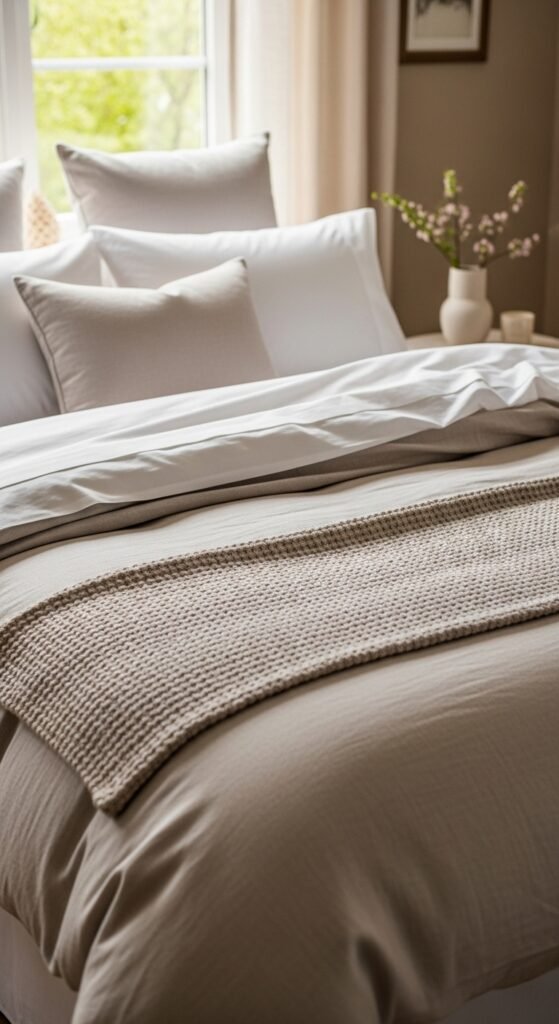
A bed scarf adds warmth without covering the entire bed. Choose textured fabrics like waffle weave or light knit to keep it season-appropriate. Fold it loosely across the foot of the bed for a relaxed finish.
This works well if you prefer simple bedding but want more visual interest. The added texture breaks up flat surfaces and makes the bed feel styled without effort.
If buying new is not an option, use a narrow throw or even a long table runner. The goal is texture, not size.
Stick to calm tones that match your bedding. This small layer can make the whole room feel more put together with minimal cost.
5. Woven Chair Seat Pads
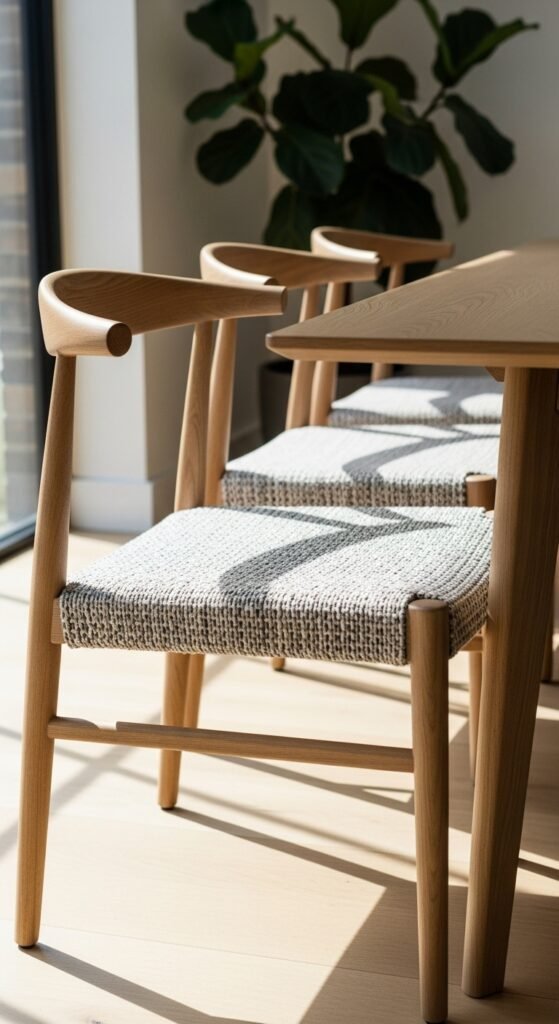
Chair seat pads add comfort and warmth in spaces that often feel hard. Woven or quilted pads soften dining chairs, desk chairs, or kitchen stools without permanent changes.
Look for ties or non-slip backs so they stay in place. Neutral shades keep them flexible across seasons.
You can also make simple pads using foam inserts and fabric scraps. Straight seams and ties are enough. This is a good beginner sewing project.
Seat pads help rooms feel welcoming during longer meals or work sessions. They also protect furniture while adding texture in a subtle way.
6. Layered Area Rugs
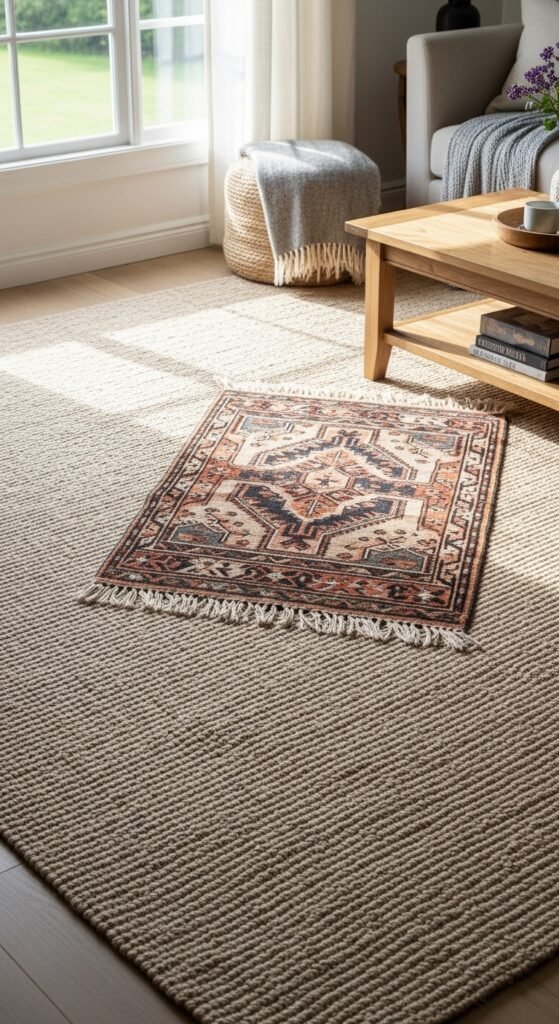
Layering rugs adds depth and warmth without covering the entire floor. Use a simple base rug and place a smaller patterned rug on top. The contrast in texture creates visual comfort.
This works well in living rooms and bedrooms. The top rug does not have to be expensive. Flatweave styles are often affordable and easy to move.
If sizes do not match perfectly, that is fine. Slightly off-center placement feels relaxed.
This approach also helps extend the life of older rugs by covering worn areas while adding interest.
7. Soft Fabric Wall Hangings
[Image Prompt: A minimal fabric wall hanging in soft neutral tones, gentle folds in the textile, natural light, calm spring interior, photographed with a high-end camera.]
Fabric wall hangings soften vertical spaces that often feel empty. Choose lightweight materials with simple shapes. This adds warmth without the heaviness of framed art.
You can hang fabric using wooden dowels or simple rods. Old scarves, table runners, or linen remnants work well.
Keep colors muted so the texture stands out. One piece is often enough.
This idea works especially well in bedrooms, hallways, or reading corners where you want a calm feel.
8. Slipcovered Accent Chairs
[Image Prompt: An accent chair with a light fabric slipcover in a sunlit corner, visible fabric texture, spring decor, photographed with a high-end camera.]
Slipcovers soften chairs and make them feel more inviting. Light cotton or linen-style fabrics work well during spring.
Ready-made covers are available, but simple draped covers tied with fabric strips can work too. This approach also protects furniture.
Stick to neutral tones for flexibility. You can remove or change covers easily as seasons shift.
This is a practical way to refresh seating without replacing furniture.
9. Fabric Table Runners
[Image Prompt: A dining table styled with a soft fabric table runner, subtle texture, natural light, spring setting, photographed with a high-end camera.]
A table runner adds warmth without covering the whole surface. Choose cotton or linen-style fabrics with subtle texture.
You can make one by hemming fabric or trimming an old tablecloth. Imperfect edges often look relaxed and natural.
Use runners on dining tables, consoles, or sideboards. They help anchor decor without clutter.
Stick to calm colors so the table stays versatile for daily use.
10. Quilted Throw Pillows
[Image Prompt: Close-up of quilted throw pillows on a sofa, visible stitching detail, soft spring colors, photographed with a high-end camera.]
Quilted pillows add comfort through stitching rather than bold color. The raised seams catch light and add interest.
Use one or two as accents rather than filling the sofa. This keeps the look balanced.
You can make simple quilted covers using straight stitching. Even basic grid patterns work well.
These pillows pair nicely with smooth fabrics, creating contrast without chaos.
11. Fabric Lampshades
[Image Prompt: A table lamp with a fabric lampshade casting soft light, visible textile texture, cozy spring interior, photographed with a high-end camera.]
Fabric lampshades soften light and add warmth instantly. Replace plastic or metal shades with fabric ones for a gentler glow.
Neutral shades work in most rooms. Textured fabric adds depth even when the lamp is off.
You can recover an old shade using adhesive spray and fabric scraps. This is an easy weekend update.
This small change can make lighting feel calmer and more inviting.
12. Textile Storage Baskets
[Image Prompt: Fabric storage baskets in a living room, soft textures, neutral tones, natural light, photographed with a high-end camera.]
Fabric baskets add warmth while hiding clutter. Use them for blankets, books, or everyday items.
Look for cotton or canvas styles with structure. Soft sides keep them flexible.
You can sew simple baskets using interfacing and fabric scraps. Even basic shapes work well.
These baskets blend function and decor without feeling bulky.
13. Layered Bed Pillows
[Image Prompt: A bed styled with layered pillows in varied fabrics, soft textures, spring tones, photographed with a high-end camera.]
Mixing pillow fabrics adds warmth without changing bedding. Combine smooth cotton with textured covers.
Limit the palette to avoid visual overload. Three to five pillows are enough.
Rotate covers seasonally to keep things feeling current.
This simple change makes bedrooms feel more welcoming.
14. Fabric-Covered Headboards
[Image Prompt: A bed with a fabric-covered headboard in a light neutral textile, soft light, spring bedroom, photographed with a high-end camera.]
Fabric headboards soften bedrooms visually and physically. Upholstered styles add comfort without extra decor.
DIY versions can be made using plywood, foam, and fabric. Staple the fabric tightly for a clean look.
Choose calm tones that match bedding.
This adds warmth to the room without taking up extra space.
15. Lightweight Knit Blankets
[Image Prompt: A lightweight knit blanket folded on a sofa, visible weave texture, spring living room, photographed with a high-end camera.]
Knit blankets add texture while staying breathable. Fold them neatly or drape casually.
Cotton knits work well during spring. Avoid thick weaves.
These blankets are easy to move between rooms as needed.
They add comfort without overwhelming the space.
16. Fabric Drawer Liners
[Image Prompt: Open drawer lined with soft fabric liner, neat organization, gentle light, photographed with a high-end camera.]
Lining drawers with fabric adds a subtle layer of warmth in overlooked areas.
Use adhesive liners or cut fabric to fit. Even leftover cotton works.
This small detail improves daily routines without cost.
It is a quiet upgrade that feels personal.
17. Textile Wall Panels
[Image Prompt: Fabric-covered wall panels in a bedroom, soft textures, neutral tones, photographed with a high-end camera.]
Fabric panels add warmth and softness to walls. They also help with sound.
Panels can be DIY using foam boards and fabric.
Arrange them symmetrically or in a simple grid.
This works well behind beds or seating areas.
18. Slipcovered Dining Chairs
[Image Prompt: Dining chairs with light fabric slipcovers, soft folds, spring dining room, photographed with a high-end camera.]
Slipcovered dining chairs soften formal spaces. Light fabrics keep them season-appropriate.
Removable covers are practical for everyday use.
You can sew simple covers or use fitted styles.
This adds comfort during meals and gatherings.
19. Textile Table Mats
[Image Prompt: Dining table set with textile placemats in neutral tones, visible fabric texture, photographed with a high-end camera.]
Fabric placemats add warmth to daily meals. Woven or quilted styles work well.
They protect surfaces while adding texture.
DIY mats are easy to make using fabric squares.
This small change makes everyday tables feel more inviting.
20. Fabric Door Draft Covers
[Image Prompt: Fabric draft cover placed at the base of a door, soft textile texture, cozy interior, photographed with a high-end camera.]
Draft covers add warmth both visually and physically. Choose soft fabrics that match your decor.
You can sew one using fabric and filling from old pillows.
They work well near entry doors or older windows.
This practical piece blends function with comfort.
21. Fabric Bench Cushions
[Image Prompt: A wooden entryway bench topped with a tailored fabric cushion in soft neutral tones, visible stitching detail, spring daylight, cozy home setting, photographed with a high-end camera.]
A fabric bench cushion adds warmth to spaces that often feel rigid, like entryways or dining nooks. Wood benches look better when softened with a cushion that invites people to sit and stay awhile. Choose cotton or canvas-style fabric so it feels breathable and season-ready.
You do not need a custom piece. Foam cut to size and wrapped in fabric works well. Secure the fabric underneath with staples or ties. If sewing feels like too much, use fabric adhesive strips for a clean edge.
Stick to neutral shades so the cushion works year-round. A subtle stripe or textured weave adds interest without dominating the space. Bench cushions are especially helpful in homes with limited seating, adding comfort without adding furniture.
22. Layered Fabric Canopy Panels
[Image Prompt: A simple bed canopy made from lightweight fabric panels draped softly from the ceiling, natural spring light, calm bedroom setting, photographed with a high-end camera.]
Light fabric canopy panels add warmth through movement and softness rather than weight. They work well over beds, reading chairs, or even daybeds. Use sheer or cotton fabric that drapes naturally.
You can hang panels from ceiling hooks or a simple frame. Keep the fabric loose so it feels relaxed. Old curtain panels work well for this and keep costs low.
Choose calm colors that blend with the room. This idea works best when the rest of the space stays simple. The fabric becomes a visual anchor without overwhelming the room.
23. Textile Wrapped Plant Pots
[Image Prompt: Indoor plant pots wrapped with soft fabric covers in neutral tones, natural light, spring decor styling, photographed with a high-end camera.]
Wrapping plant pots with fabric adds texture while keeping greenery front and center. Use cotton or linen-style fabric and secure it with twine or simple stitching.
This works well for basic plastic pots that feel too plain. Choose fabric that complements your room palette so the plants feel integrated rather than separate.
Fabric wraps can be removed easily for cleaning or swapping. This is a low-effort way to soften shelves, window sills, and side tables where plants often sit alone.
24. Upholstered Window Seats
[Image Prompt: A cozy window seat with an upholstered cushion and fabric pillows, sunlight streaming in, spring interior, photographed with a high-end camera.]
An upholstered window seat adds comfort and warmth in a space already filled with light. The fabric keeps the seat inviting rather than stiff.
You can create one using a plywood base, foam, and fabric. Even renters can use a removable cushion placed on an existing ledge.
Choose durable fabric that handles daily use. Neutral tones keep it flexible for seasonal changes. Add one or two pillows for support without clutter.
25. Fabric Wall Pocket Organizers
[Image Prompt: Fabric wall pocket organizer hanging in a home office, soft textile texture, neutral tones, spring daylight, photographed with a high-end camera.]
Fabric wall pockets add storage while softening vertical space. They work well in offices, entryways, or craft areas.
Cotton organizers with stitched pockets are easy to hang and easy to make. You can sew simple rectangles with divided sections or repurpose hanging shoe organizers.
Keep items light so the fabric holds its shape. This solution keeps essentials close while adding warmth to walls that often feel bare.
26. Textile-Lined Shelving
[Image Prompt: Open shelves lined with soft fabric backing, books and decor styled neatly, natural light, photographed with a high-end camera.]
Lining shelves with fabric adds subtle depth and warmth behind books and decor. Use removable adhesive or tension rods to secure the fabric.
Choose thin cotton or linen-style fabric so shelves remain practical. Solid colors work best, letting displayed items stand out.
This is an easy way to update shelves without painting. The fabric can be swapped out whenever you want a new look.
27. Soft Textile Room Dividers
[Image Prompt: A lightweight fabric room divider panel in a bright spring interior, gentle folds in the textile, photographed with a high-end camera.]
Fabric room dividers create separation without making spaces feel closed off. Lightweight panels work well in open layouts, studios, or shared rooms.
Use curtain rods or ceiling tracks to hang fabric panels. Neutral tones keep the look calm and adaptable.
This solution adds warmth while offering privacy. When not needed, panels can be tied back or removed easily.
Conclusion
Textiles shape how a home feels far more than most people expect. Simple fabric updates can add comfort, soften hard surfaces, and bring balance without major changes. Whether you swap cushion covers, layer rugs, or add lightweight throws, each idea here focuses on easy steps and realistic budgets. Pick one or two that fit your space and build from there. Small fabric changes often lead to rooms that feel calmer, warmer, and easier to enjoy every day.

Leave a Reply