

Flat walls can make even a beautifully furnished room feel a little… unfinished. If your space feels like it’s missing something but you can’t quite put your finger on it, textured wallpaper might be the secret ingredient. It adds depth, warmth, and visual interest without the need for extra furniture or clutter.
The best part? You don’t need bold colors or dramatic patterns to make an impact. Subtle texture can completely transform how a room feels. Let’s walk through how to decorate with textured wallpaper in a way that looks intentional, stylish, and easy to live with.
What Makes Textured Wallpaper So Effective?
Textured wallpaper works differently than flat prints or painted walls. Instead of relying on color alone, it plays with light and shadow.
Here’s why it adds instant depth:
- Raised surfaces catch light at different angles
- Shadows shift throughout the day
- Walls feel layered instead of flat
- Rooms feel warmer and more finished
Common textures include grasscloth, linen-look vinyl, embossed patterns, plaster-style finishes, and soft geometric reliefs. Even neutral tones feel richer when texture is involved.
Choose the Right Wall for Maximum Impact
Not every wall needs texture. In fact, one well-chosen wall often looks better than covering an entire room.
Great spots for textured wallpaper:
- Behind the sofa in a living room
- The wall behind the bed
- A dining room feature wall
- An entryway or hallway focal point
- A home office backdrop
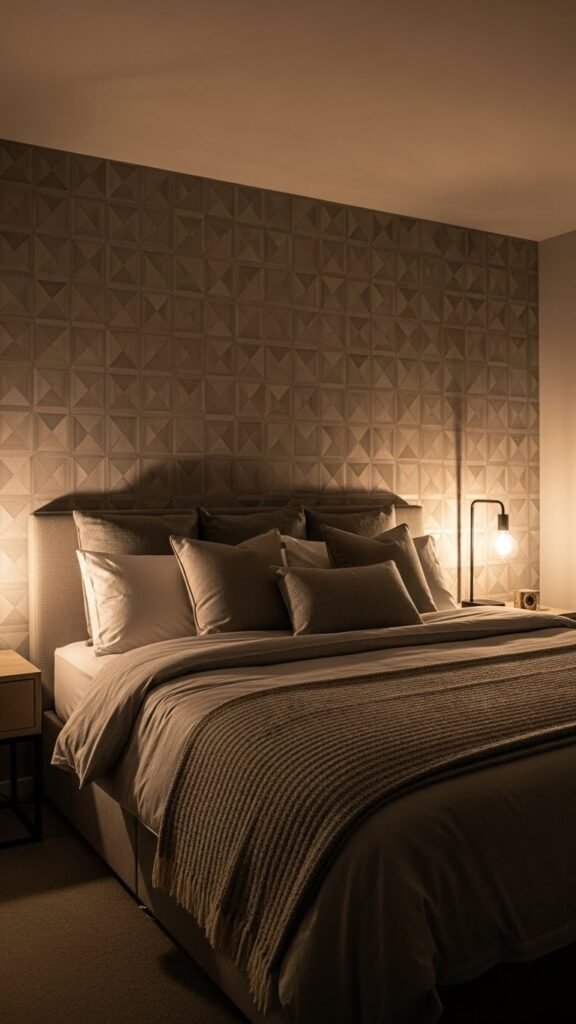
Tip: Start with the wall your eye naturally lands on when you enter the room. Texture there will instantly anchor the space.
Match Texture to Your Home’s Style
Texture should support your overall look, not compete with it. Think of wallpaper texture like fabric—it sets the mood.
Style pairing ideas:
- Minimal or modern: Fine linen textures, subtle geometric embossing
- Cozy or rustic: Grasscloth, woven or organic finishes
- Classic or elegant: Soft damask textures, plaster-inspired walls
- Contemporary spaces: Linear or abstract raised patterns
If your furniture is already bold, go subtle on the wall. If your decor is simple, a slightly stronger texture can do more of the talking.
Use Neutral Colors to Let Texture Shine
Texture doesn’t need loud color to stand out. In fact, neutral shades often look more expensive and timeless.
Best color choices for textured wallpaper:
- Warm white or cream
- Soft beige or sand
- Light gray or greige
- Muted earth tones
These tones allow the texture itself to create interest while keeping the room calm and flexible for styling changes later.
Balance Textured Walls With Smooth Surfaces
Once you add texture to a wall, balance becomes key. Too many competing textures can overwhelm a room.
Create contrast with:
- Smooth furniture finishes
- Simple window treatments
- Clean-lined shelving
- Minimal wall art
Let the wallpaper be the star. You don’t need to cover it up with busy decor. A few intentional pieces nearby will feel more impactful than a crowded wall.
Think About Lighting (It Makes a Big Difference)
Lighting can make or break textured wallpaper. The goal is to highlight depth, not flatten it.
Lighting tips:
- Use warm, directional lighting
- Add wall sconces or table lamps nearby
- Avoid harsh overhead lighting only
- Let natural light hit the textured wall if possible
[Image Prompt] A softly lit living room corner with textured wallpaper, a warm table lamp casting gentle shadows, and minimal decor highlighting the wall’s depth.
Shadows are your friend here. They bring the texture to life.
Start Small if You’re Unsure
If wallpaper feels intimidating, you don’t have to commit to a full wall right away.
Begin with:
- A small accent wall
- A reading nook
- A powder room
- The back of open shelving
Once you see how texture changes the feel of a space, you’ll gain confidence to use it elsewhere.
Final Thoughts: Let Your Walls Do the Work
Textured wallpaper is one of those design choices that quietly elevates a room. It adds depth without noise, interest without clutter, and warmth without extra decor. Whether you go bold or subtle, the key is intention—choose the right wall, the right texture, and let lighting do the rest.
Save this idea for later and start looking at your walls with fresh eyes. A little texture might be all your space needs.
Leave a Reply