

Decorating a kids’ bedroom can feel like a tug-of-war between playful chaos and Pinterest-perfect calm. Kids want color, personality, and space to play. Parents want something that still looks pulled together. The good news? You can absolutely have both. With a few smart choices, kids’ bedrooms can feel joyful and stylish—without needing a full redesign every year.
[Image Prompt] A bright, stylish kids’ bedroom with soft neutral walls, a playful rug, colorful pillows, wooden furniture, and natural light, photographed in a cozy, modern home setting.
Start With a Neutral Base That Grows With Them
A neutral foundation gives you flexibility as your child’s tastes change. Walls, floors, and large furniture pieces should stay calm and versatile.
Good base choices include:
- Soft whites, warm beige, or light greige walls
- Natural wood beds or dressers
- Simple rugs in muted patterns
This doesn’t mean boring. A neutral base acts like a blank canvas. It lets you layer in fun through accessories instead of committing to bold colors everywhere.
Why this works: When your child outgrows dinosaurs or princesses, you won’t need to repaint the entire room. Swapping décor is faster and budget-friendly.
Add Color Through Accessories (Not Everything)
Once the base is set, bring in color where it’s easy to change.
Think:
- Bedding sets
- Throw pillows
- Curtains
- Wall art
[Image Prompt] A kids’ bedroom styled with colorful bedding, playful cushions, framed artwork, and a neutral bed frame, photographed with a clean, airy aesthetic.
Choose 2–3 main colors and repeat them around the room. This keeps the space from feeling cluttered while still feeling fun.
Tip: If your child loves bright colors, use them in smaller doses. A bold comforter pops more when everything else is calm.
Create Zones for Sleep, Play, and Creativity
Kids’ rooms do more than just hold a bed. Creating clear zones helps the space feel organized and intentional.
Consider:
- A cozy sleep zone with soft lighting
- A play area with open floor space or a small rug
- A creative corner with a desk, art supplies, or books
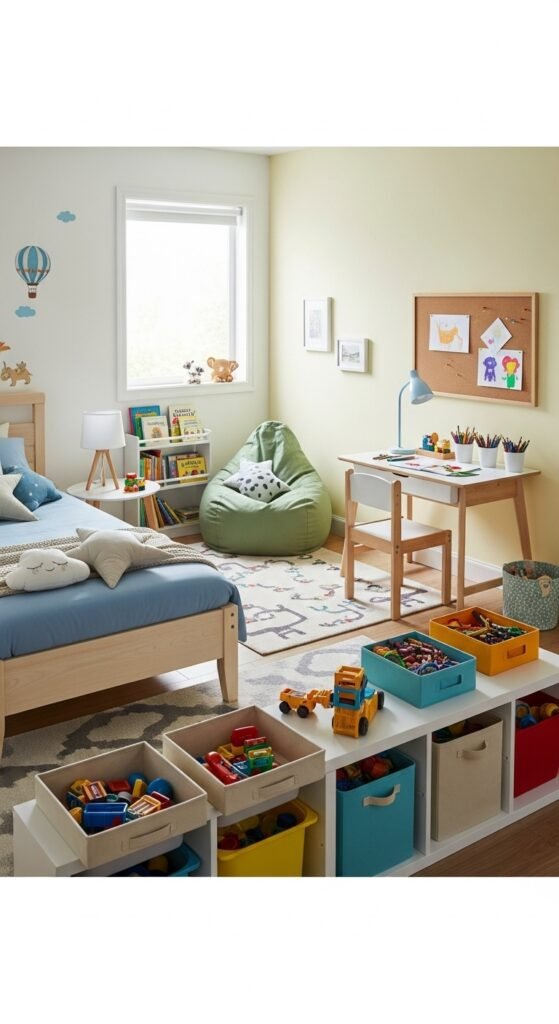
Use furniture placement—not walls—to define each area. This helps kids know where activities belong and keeps toys from creeping into every corner.
Choose Furniture That’s Practical and Stylish
Furniture can be both functional and good-looking. Look for pieces that work hard without looking bulky.
Smart furniture ideas:
- Beds with built-in drawers
- Storage benches at the foot of the bed
- Open shelving mixed with baskets
Stick with simple shapes and natural finishes. They feel timeless and pair easily with colorful décor.
Bonus: Multi-use furniture helps keep clutter under control, which instantly makes a room feel more styled.
Make Wall Décor Playful but Polished
Walls are where personality really shines—but balance is key.
Instead of covering every inch, try:
- A small gallery wall with framed prints
- One removable wall decal or mural
- A peg rail for hats, bags, or art
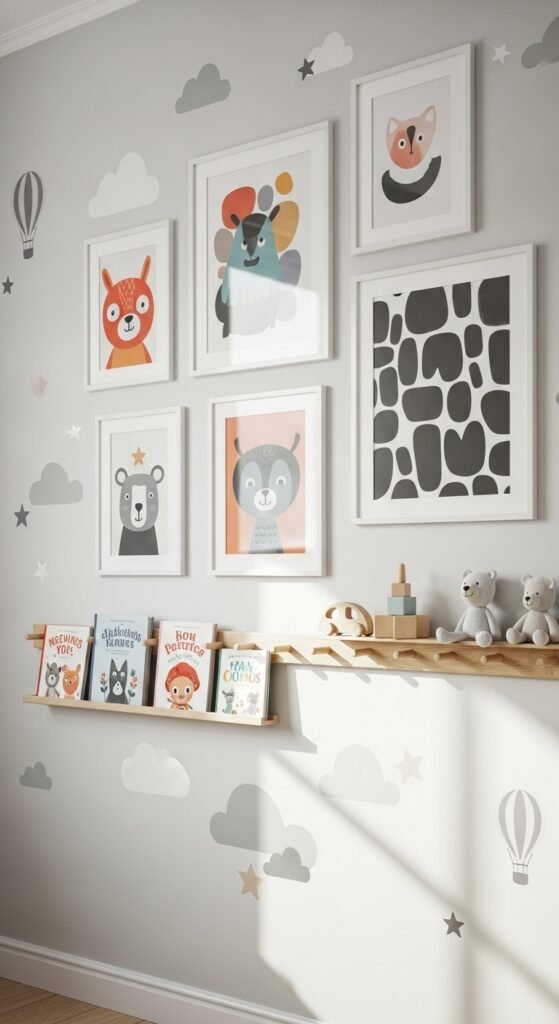
Keep layouts intentional. Even fun art looks better when spaced evenly and aligned.
Tip: Use removable options so updates don’t turn into big projects.
Mix Fun Textures for a Cozy Feel
Texture adds warmth and depth—especially in kids’ rooms.
Layer in:
- Soft rugs
- Knit blankets
- Cushioned poufs or floor pillows
This makes the room inviting while still looking styled. Texture also helps balance brighter colors and playful patterns.
Let Their Personality Show (In Small Doses)
Kids should feel proud of their space. Let them choose a few elements they love.
Good places for choice:
- One accent pillow
- A piece of wall art
- A favorite color for accessories
This gives them ownership without letting the room spiral into visual overload.
Parent win: You keep the overall look cohesive while they still feel heard.
Keep Storage Simple and Visible
A stylish room is easier to maintain when everything has a place.
Use:
- Open bins for toys
- Labeled baskets for quick clean-up
- Low shelves kids can reach themselves
When storage is easy, tidying feels less like a chore and more like part of the routine.
Final Takeaway
Decorating kids’ bedrooms doesn’t have to mean choosing between fun and style. Start with a neutral base. Add color thoughtfully. Create zones, choose practical furniture, and layer in personality where it counts. The result is a space your child loves—and one you’re happy to look at every day.
Save this guide for later when it’s time to refresh your child’s room without starting from scratch.
Leave a Reply