

DIY shelves are one of those rare home upgrades that check every box. They’re practical. They’re stylish. And best of all, they can be done on a budget without sacrificing personality. Whether you’re decorating a small apartment or refreshing a family home, shelves give you storage and décor in one simple project.
[Image Prompt] A bright, cozy living room with simple DIY wooden shelves mounted on a white wall, styled with books, plants, framed photos, and small ceramic decor, photographed in natural daylight with a high-end camera.
The trick is knowing how to plan, build, and style shelves so they look intentional—not temporary. Let’s break it down step by step.
Why DIY Shelves Are a Smart Budget Choice
Store-bought shelving can get expensive fast. Especially when you want something custom-sized or styled to match your space. DIY shelves let you control the cost and the look.
With DIY shelves, you can:
- Use affordable materials like basic lumber or reclaimed wood
- Customize the length, depth, and height exactly to your wall
- Upgrade the style slowly over time instead of all at once
Even simple shelves can replace bulky furniture pieces, helping you save money while opening up the room visually.
Choose the Right Shelf Style for Your Space
Before buying materials, decide what kind of shelf fits your room and lifestyle. Not all shelves serve the same purpose.
Popular DIY shelf styles include:
- Floating shelves for a clean, modern look
- Bracket shelves for extra strength and character
- Corner shelves to use awkward or unused spaces
- Ladder-style shelves for renters or flexible layouts
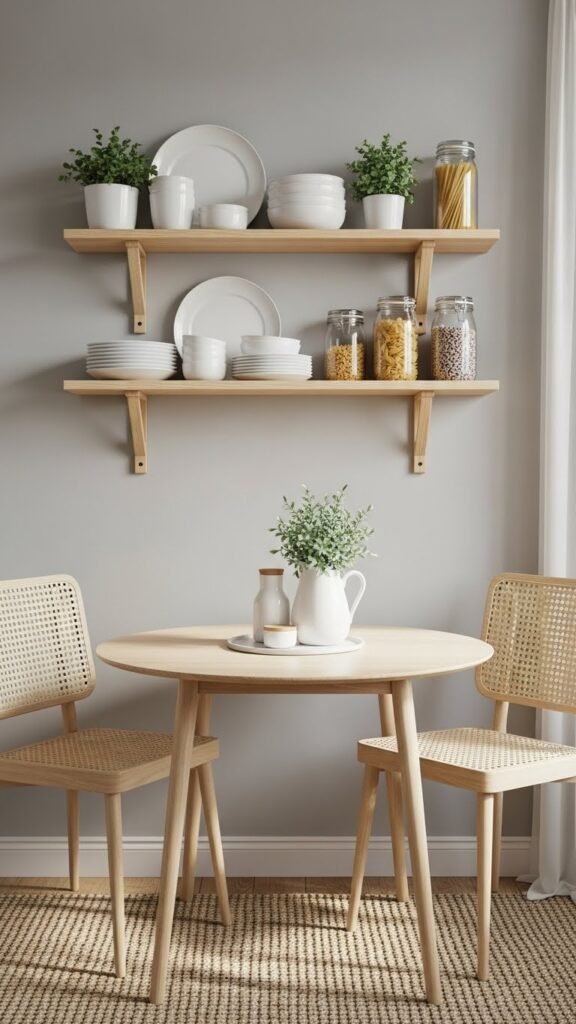
Think about what the shelves will hold. Books and dishes need more support than plants or décor. Planning ahead keeps you from overspending on unnecessary materials.
Save Money on Materials Without Cutting Corners
You don’t need premium supplies to get a polished result. Many beautiful shelves are built from simple, low-cost materials.
Ways to save:
- Buy standard lumber and have it cut at the store
- Look for reclaimed wood from old furniture or pallets
- Use basic metal brackets instead of decorative ones
- Sand and stain yourself instead of buying pre-finished boards
A coat of paint or stain can completely change the look of inexpensive wood. Take your time with prep—it’s what makes budget shelves look high-end.
Install Shelves the Right Way (Even on a Budget)
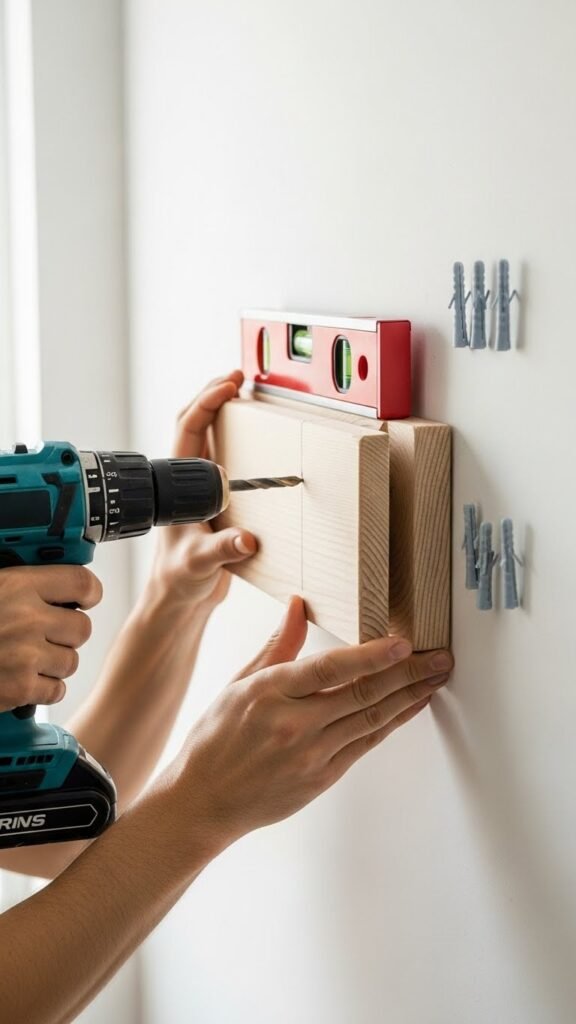
Good installation matters just as much as good design. Poorly mounted shelves can sag or feel unsafe, which ruins the whole project.
Basic installation tips:
- Always use a level
- Anchor into wall studs when possible
- Use wall anchors rated for the weight you plan to store
- Space brackets evenly for balance
Floating shelves often cost more because of hardware, but you can recreate the look with hidden brackets or simple cleats made from scrap wood.
Style DIY Shelves to Look Thoughtful, Not Cluttered
Styling is where DIY shelves really shine. The goal is to make them feel intentional, not like extra storage slapped on the wall.
Try this simple styling formula:
- One functional item (books, baskets, containers)
- One organic element (plants, wood, pottery)
- One personal touch (photos, art, keepsakes)
Leave some empty space. Shelves don’t need to be full to look finished. Negative space helps everything else stand out and keeps the room feeling calm.
Use Shelves to Replace Expensive Furniture
DIY shelves can often replace pricier furniture pieces altogether.
For example:
- Open shelves instead of a bulky bookcase
- Wall shelves in place of side tables
- Kitchen shelves instead of extra cabinets
- Bathroom shelves instead of tall storage units
This approach not only saves money but also makes rooms feel lighter and more open—especially in smaller homes.
[Image Prompt] A minimalist home office with DIY floating shelves above a desk, styled with books, framed art, and plants in soft neutral tones.
Make Shelves Work in Every Room
DIY shelves aren’t just for living rooms. They can work almost anywhere.
Ideas by room:
- Kitchen: Everyday dishes, mugs, or jars
- Bathroom: Towels, baskets, and small plants
- Bedroom: Books, décor, or folded clothing
- Entryway: Keys, bags, and display pieces
Matching shelf finishes across rooms can create a cohesive look without buying matching furniture sets.
Upgrade Over Time Without Rebuilding
One of the biggest benefits of DIY shelves is flexibility. You don’t have to get everything perfect on day one.
Easy upgrades later:
- Swap brackets for a new style
- Change paint or stain color
- Restyle with seasonal décor
- Add lighting underneath
This makes shelves a long-term investment instead of a one-time project.
Final Takeaway
DIY shelves are proof that decorating on a budget doesn’t mean settling. With simple materials, thoughtful placement, and intentional styling, you can create shelves that look custom and save money at the same time.
Start small. Build confidence. Style slowly.
Save this idea for later—and start planning your first DIY shelf project today.
Leave a Reply