

A cluttered desk can quietly drain your energy before the workday even starts. Papers pile up. Cables tangle. Random décor competes for attention. A minimalist workspace, on the other hand, creates breathing room for your mind. It helps you focus longer, think clearer, and feel calmer while you work.
The good news? You don’t need a designer budget or a total room overhaul. Small, intentional choices can completely change how your workspace feels and functions.
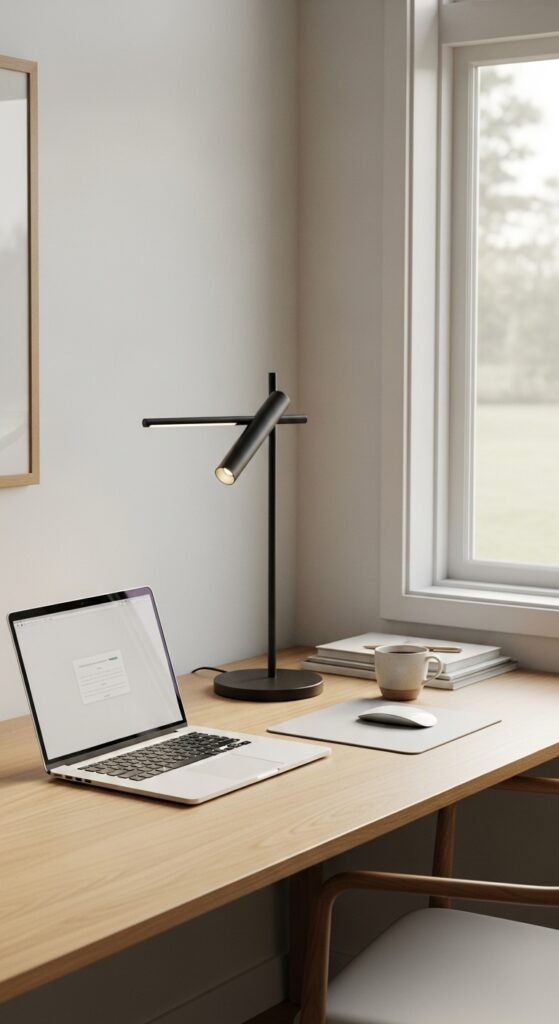
Start With a Clean, Clear Foundation
Before adding anything new, remove what doesn’t belong.
A minimalist workspace starts with subtraction. Clear off your desk completely and only put back what you genuinely use every day.
Focus on:
- One main work surface
- One primary chair
- Only essential tools
If something doesn’t support your daily work, it doesn’t need to live on your desk.
This step alone can feel surprisingly refreshing. You’ll notice how much visual noise disappears when your desk isn’t competing for attention.
Tip: Keep a small drawer or box nearby for items you use weekly but not daily. This keeps your surface calm without sacrificing convenience.
Choose a Calm, Neutral Color Palette
Color has a powerful effect on focus. Minimalist workspaces thrive on soft, neutral tones that don’t distract the eye.
Think:
- Warm whites
- Soft beige
- Light gray
- Muted wood tones
These shades reflect light well and create a sense of openness, even in small spaces.
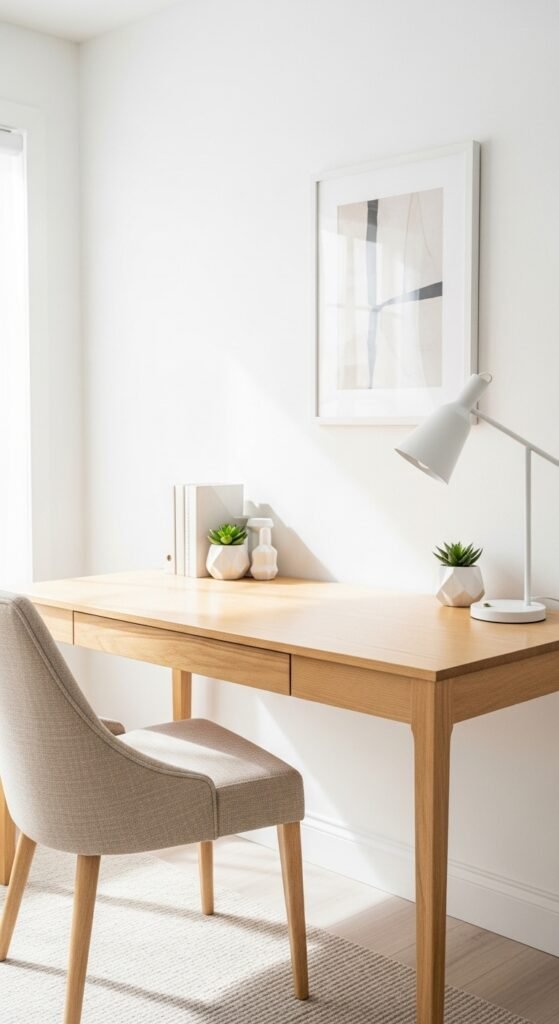
If your walls are bold or busy, balance them with simple furniture and accessories. If your space is already neutral, avoid adding loud pops of color that pull attention away from your screen.
Small contrast is fine. Strong contrast is not the goal here.
Invest in Ergonomic, Minimal Furniture
Minimalism doesn’t mean uncomfortable.
Your desk and chair should support your body just as much as your style. Clean lines and simple shapes can still be incredibly practical.
Look for:
- A desk with straight edges and minimal hardware
- A supportive chair in a neutral fabric
- Furniture that fits your space without crowding it
Avoid bulky storage units or oversized desks that dominate the room. A properly scaled setup keeps the space feeling light and intentional.
If storage is needed, choose closed cabinets or drawers. Hiding visual clutter is key to maintaining a focused environment.
Use Smart Storage to Hide Visual Noise
Visual clutter is one of the biggest focus killers. Even useful items can become distractions if they’re always visible.
Minimalist storage ideas include:
- Drawer organizers for small supplies
- Cable boxes or clips to manage cords
- Simple shelves with limited items
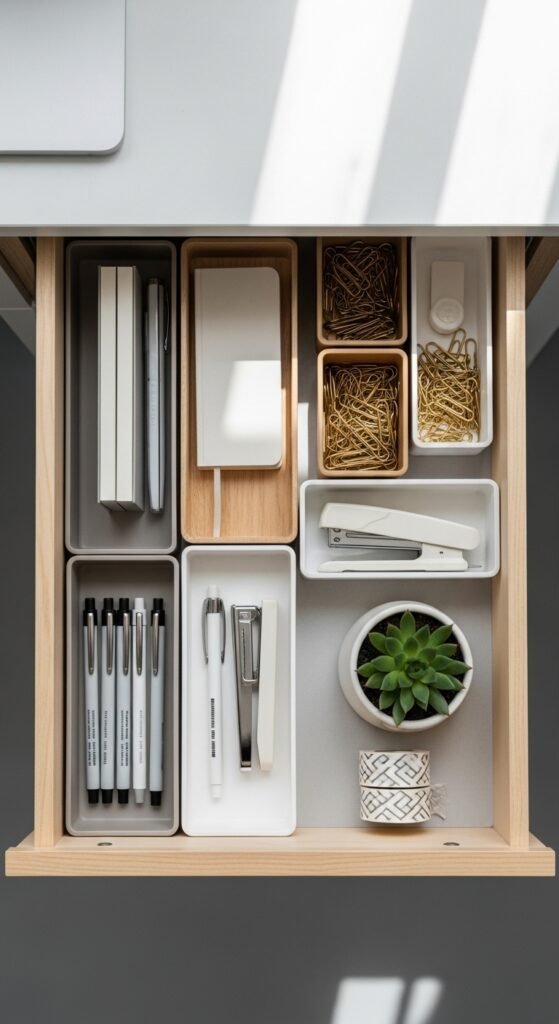
Aim to keep your desktop nearly empty. When everything has a place, your mind doesn’t have to process extra information while you work.
Rule of thumb: If you don’t touch it daily, store it out of sight.
Add One or Two Purposeful Decorative Elements
Minimalist doesn’t mean sterile. A little warmth goes a long way.
Choose décor that serves a purpose or creates calm:
- A small plant for freshness
- A framed print with soft tones
- A simple ceramic object
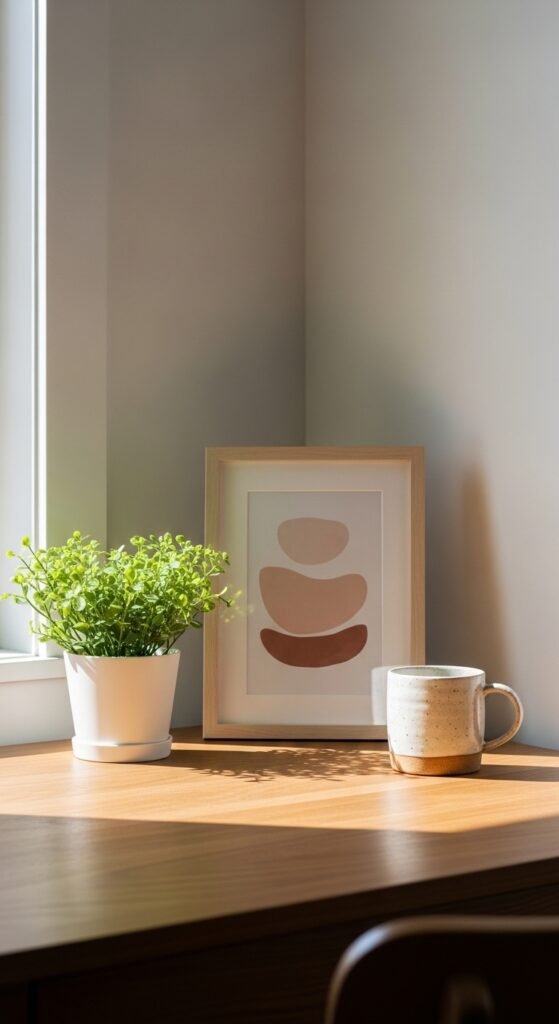
Limit yourself to one or two decorative items. This keeps the space personal without becoming distracting.
Plants are especially effective. They soften clean lines and add life without visual clutter.
Maximize Natural Light and Soft Lighting
Lighting affects both mood and productivity. Whenever possible, place your desk near a window.
Natural light:
- Reduces eye strain
- Improves focus
- Makes small spaces feel larger
If natural light is limited, choose a simple desk lamp with a warm, soft glow. Avoid harsh overhead lighting that creates glare or shadows.
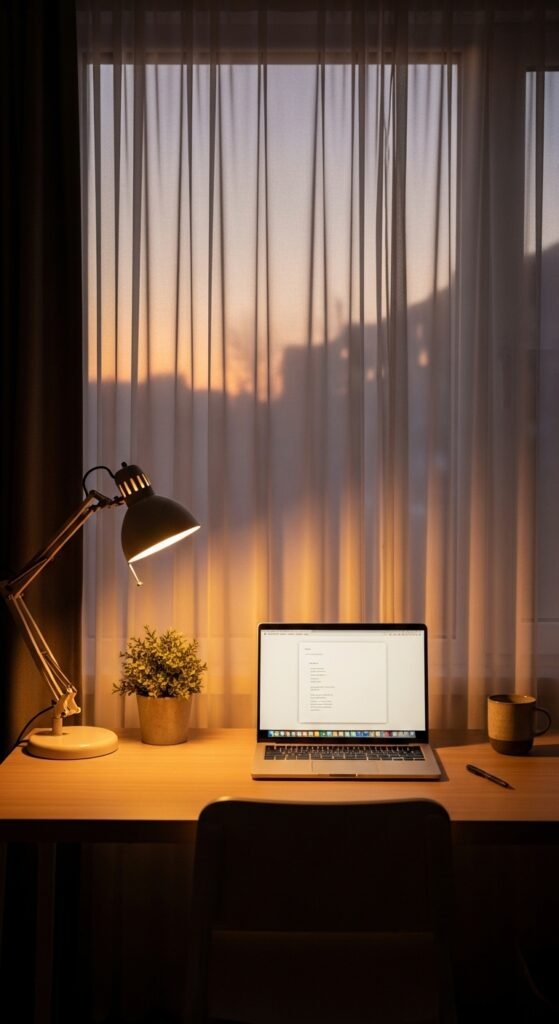
The goal is even, gentle lighting that supports long work sessions without fatigue.
Keep the Workspace Flexible and Easy to Reset
A minimalist workspace should be easy to maintain.
At the end of each day:
- Clear your desk
- Put tools back in their place
- Wipe down the surface
This simple reset habit keeps clutter from creeping back in and makes starting work the next day feel effortless.
Minimalism works best when it supports your routine, not complicates it.
Final Takeaway
Decorating a minimalist workspace isn’t about perfection. It’s about intention. When your space feels calm, your mind follows.
Start small. Clear one surface. Choose one neutral upgrade. Add one calming detail. Over time, these choices add up to a workspace that truly improves focus and makes work feel lighter.
Save this guide for later and revisit it whenever your desk starts to feel overwhelming again.

Leave a Reply