

Wall shelves are one of the easiest ways to add storage without sacrificing floor space—but only if you choose them wisely. The right shelves can make a room feel organized, intentional, and even more spacious. The wrong ones can feel cluttered or impractical fast. If you want shelves that actually work for your home, here’s how to choose styles, sizes, and layouts that maximize storage while still looking great.
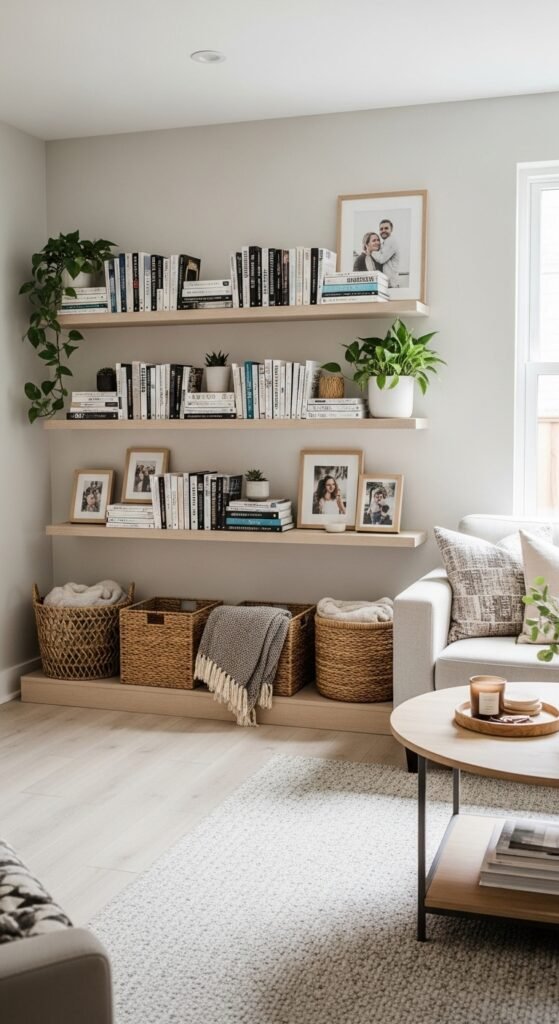
Start With What You Need to Store
Before you shop, take a moment to think about what will live on the shelves. Storage needs should drive your decisions, not just style.
Ask yourself:
- Are you storing books, décor, or everyday items?
- Do you need shelves for function, display, or both?
- Will the items be heavy or lightweight?
For practical storage, deeper shelves are better. For décor-only areas, slimmer shelves can keep things from looking bulky.
Quick tip:
- Books & baskets: 8–12 inches deep
- Decor & frames: 5–7 inches deep
- Everyday grab items: sturdy shelves with weight ratings
This step prevents buying shelves that look good online but don’t actually fit your lifestyle.
Choose the Right Shelf Style for Maximum Capacity
Not all shelves hold the same amount—even if they’re the same length.
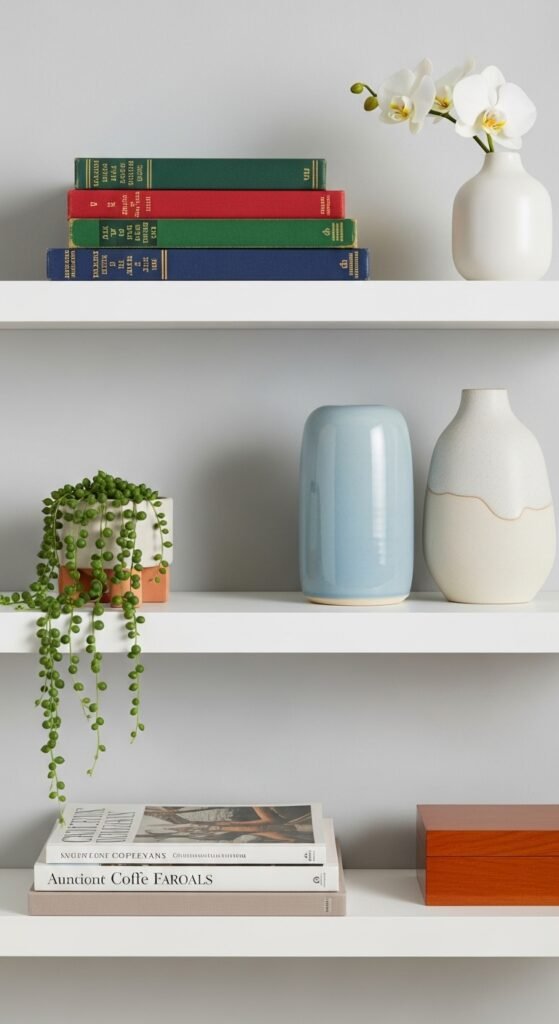
Floating Shelves
- Clean and modern
- Best for light to medium-weight items
- Great for small rooms where visual clutter matters
Bracketed Shelves
- Much stronger and more flexible
- Can hold heavier items like bins or stacks of books
- Ideal for kitchens, offices, and garages
Box or Cube Shelves
- Offer built-in structure
- Help contain smaller items
- Perfect for creating visual order
If storage is the priority, bracketed or box shelves usually win. Floating shelves shine when you want storage that feels lighter and less obvious.
Think Vertically, Not Just Horizontally
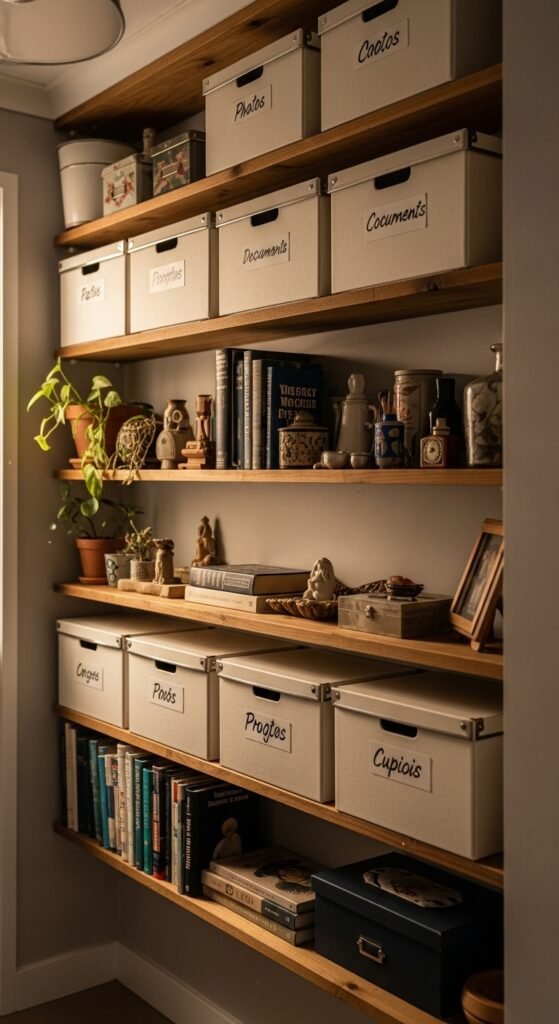
One shelf rarely solves storage problems. Vertical stacking is where wall shelves really shine.
Instead of one long shelf, consider:
- Two or three shelves stacked evenly
- A full vertical column of shelves in narrow spaces
- Shelves that go closer to the ceiling for rarely used items
This approach:
- Doubles or triples storage
- Draws the eye upward, making rooms feel taller
- Uses wall space that often goes unused
Spacing tip:
- 10–14 inches between shelves works for most needs
- Adjust spacing for tall baskets or decor pieces
Match Shelf Size to Wall Size
Oversized shelves on small walls can overwhelm a room. Tiny shelves on large walls can look scattered.
For balance:
- Use long shelves on wide walls like above sofas or beds
- Use short shelves in corners, entryways, or beside doors
- Match shelf width to nearby furniture when possible
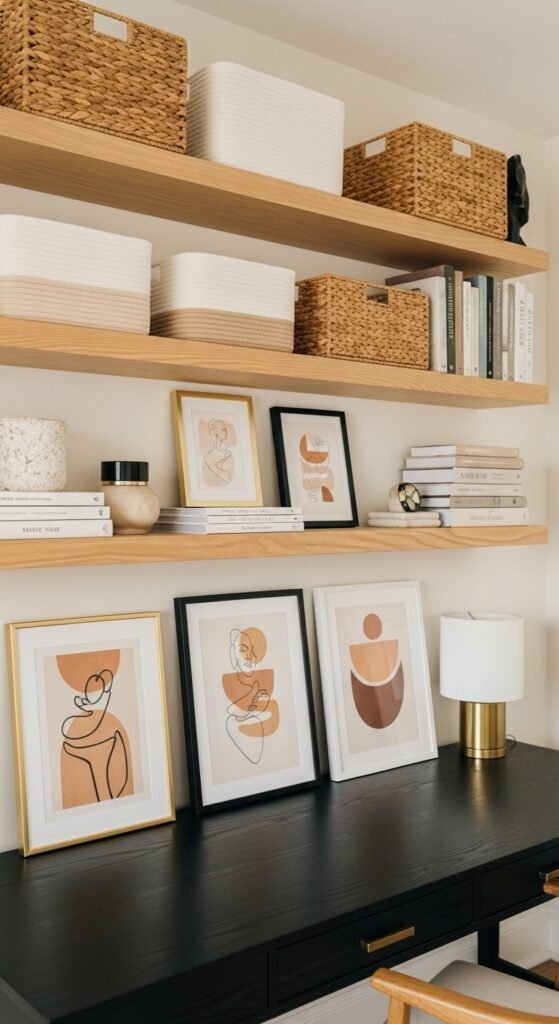
A good rule of thumb:
- Shelves should fill about 60–75% of the wall width they’re on
- Leave some breathing room on each side
This keeps storage looking intentional instead of accidental.
Use Storage-Friendly Styling Tricks
How you style shelves matters just as much as the shelves themselves.
Smart storage styling ideas:
- Use matching baskets or bins to hide clutter
- Stack books horizontally to save space
- Group smaller items on trays
- Mix practical items with decor to keep shelves from feeling too utilitarian
Bulletproof combo:
- Bottom shelf: baskets or boxes
- Middle shelves: books + functional items
- Top shelf: lighter decor or plants
This layered approach maximizes space and keeps shelves visually calm.
Don’t Forget Weight and Wall Type
Storage shelves are only as good as their installation.
Before mounting:
- Check the shelf’s weight limit
- Identify wall studs when possible
- Use anchors rated for your wall type
If you plan to store heavier items:
- Choose solid wood or metal shelves
- Opt for brackets over floating styles
- Mount into studs for peace of mind
This step protects both your belongings and your walls.
Choose Finishes That Blend In (or Stand Out on Purpose)
To make storage feel seamless:
- Match shelf color to wall color for a built-in look
- Use light finishes to keep rooms airy
- Choose darker shelves to anchor large walls
If your shelves visually blend in, they can hold more without feeling crowded. If they stand out, keep styling simpler so the shelves don’t overwhelm the space.
Final Takeaway
Choosing wall shelves that maximize storage isn’t about buying the biggest option—it’s about matching the shelf to your needs, wall space, and daily habits. Think vertically, choose sturdy styles, and style with intention. When done right, wall shelves can completely transform how your home functions and feels.
Save this guide for later, and use it the next time you’re planning a storage upgrade.

Leave a Reply