

A walk-in closet can feel like a dream—until it turns into a cluttered maze of clothes, shoes, and forgotten items. The good news? With smart design choices, even a modest walk-in closet can feel spacious, organized, and easy to use. Whether you’re starting from scratch or upgrading what you already have, a few intentional decisions can completely change how your closet works for you.
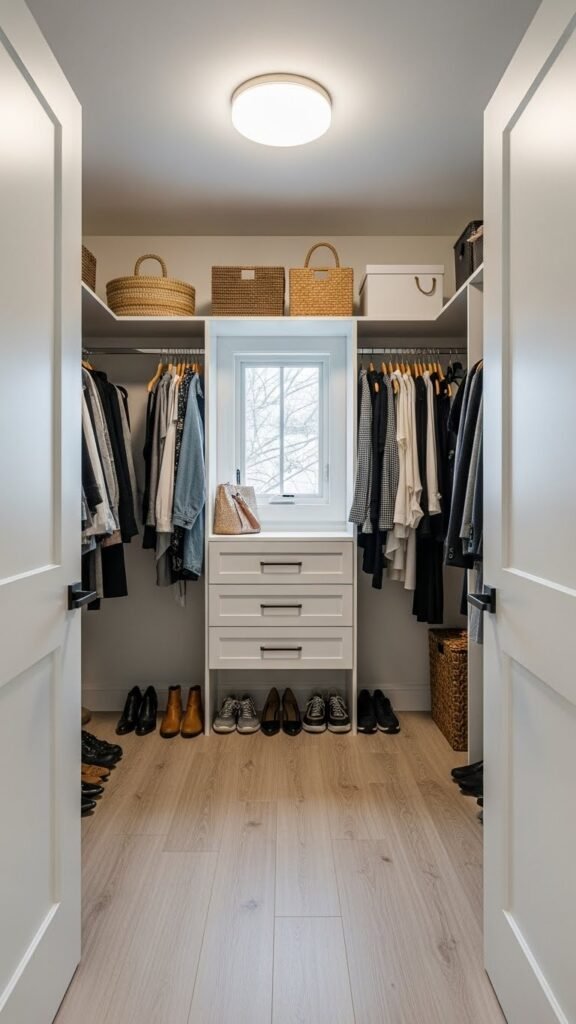
Start With a Clear Plan (Before Buying Anything)
Before shelves, drawers, or fancy organizers, start with a plan. This step alone can save you space, money, and frustration.
Ask yourself:
- What do you store the most? (Hanging clothes, folded items, shoes, accessories)
- What feels messy or hard to reach right now?
- Do you want everything visible, or partly hidden?
Quick planning tips:
- Measure wall lengths, ceiling height, and door clearance.
- Sort items into categories before designing storage.
- Design around daily-use items first, special pieces second.
A closet that matches your habits will always feel bigger than one that just looks nice.
Use Vertical Space From Floor to Ceiling
One of the biggest mistakes in walk-in closets is ignoring vertical space. Empty space above rods or shelves is wasted potential.
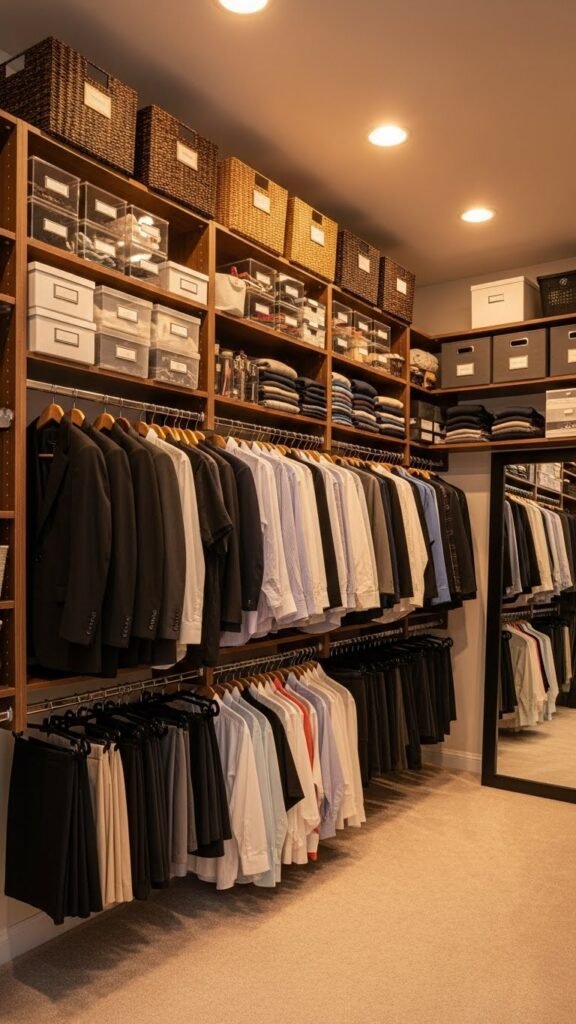
Ways to maximize height:
- Install double hanging rods for shirts and pants.
- Add high shelves for off-season clothing or storage bins.
- Use slim ladders or step stools for easy access.
If your ceiling is tall, vertical storage instantly doubles capacity without making the room feel crowded.
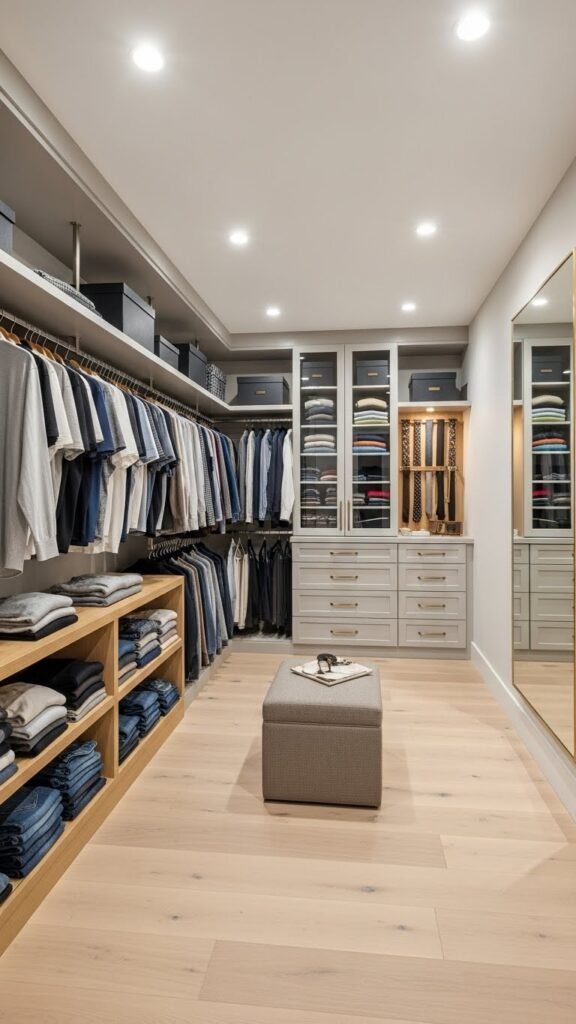
Choose the Right Mix of Hanging, Shelves, and Drawers
A balanced layout makes everything easier to find—and keeps clutter from building up.
Use hanging space for:
- Jackets, dresses, coats
- Shirts that wrinkle easily
Use shelves for:
- Folded items like sweaters and denim
- Bags and boxes
Use drawers for:
- Accessories
- Small clothing items
- Items you want hidden but accessible
Pro tip:
- Drawers should be eye-level or waist-level for the items you use most.
- Open shelving keeps things visible and prevents overstuffing.
Design Smart Storage for Shoes and Accessories
Shoes and accessories can quietly steal space if they don’t have a proper home.
Smart shoe storage ideas:
- Slim open racks instead of bulky shelves
- Vertical shoe cubbies
- Adjustable shelves for different shoe heights
Accessory solutions:
- Pull-out trays for jewelry
- Hooks for bags and belts
- Shallow drawers with dividers
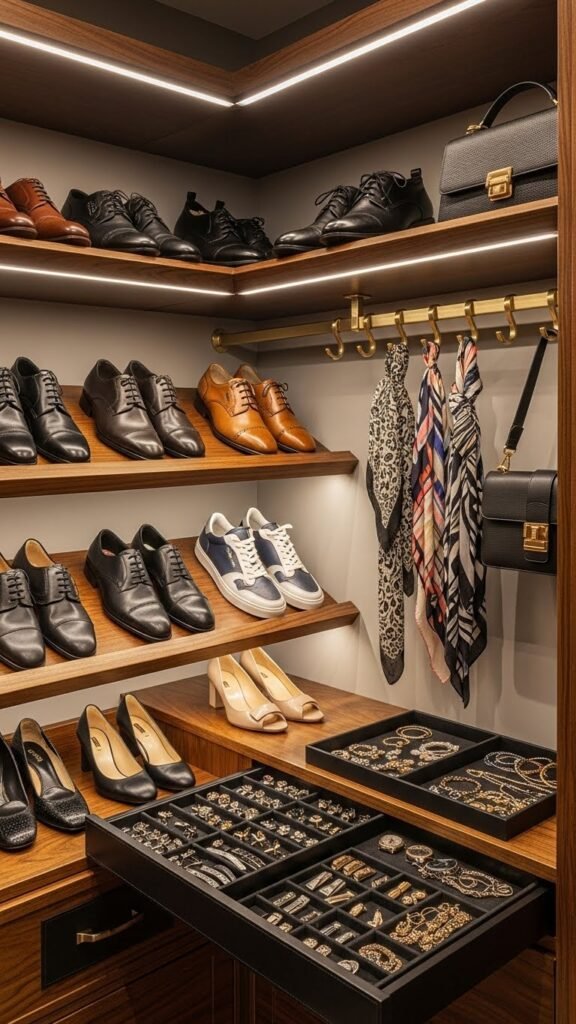
Keeping smaller items organized frees up visual space—and makes the closet feel calm instead of chaotic.
Use Light, Mirrors, and Color to Create Space
Design isn’t just about storage. Visual tricks can make your walk-in closet feel larger and more open.
Easy upgrades:
- Light-colored walls and shelving
- Mirrors on doors or walls
- Soft LED strip lighting under shelves
Lighting tips:
- Use overhead lighting for overall brightness
- Add targeted lighting for shelves and hanging areas
- Avoid dark corners where clutter hides
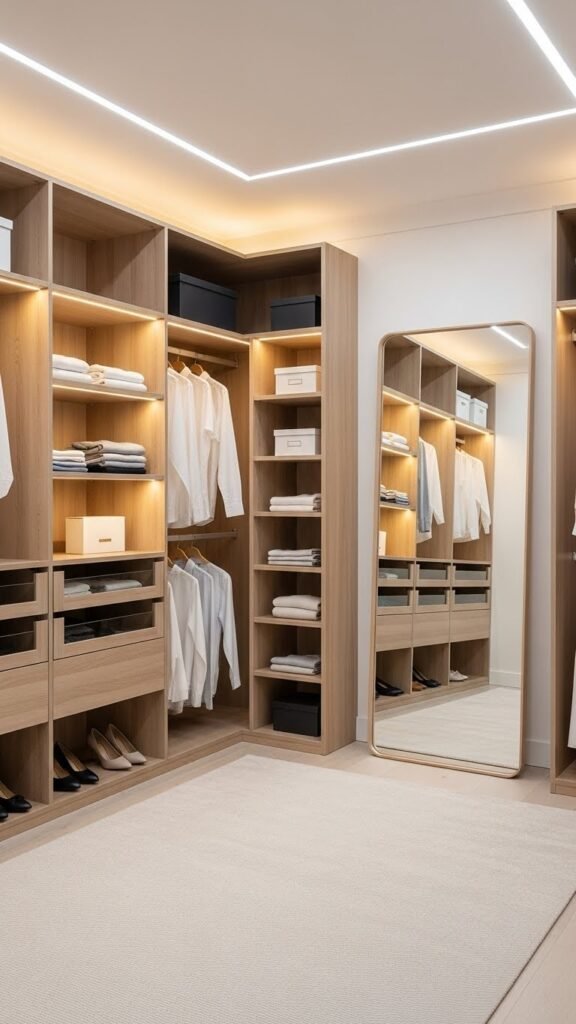
Good lighting doesn’t just help you see—it makes the entire space feel bigger.
Keep It Flexible for the Future
Your wardrobe will change, and your closet should adapt with it.
Look for:
- Adjustable shelves and rods
- Modular systems you can reconfigure
- Removable dividers and bins
Flexibility helps you:
- Avoid future renovations
- Adjust for seasonal changes
- Keep the closet working long-term
A flexible closet grows with you instead of forcing constant reorganization.
Final Takeaway
A walk-in closet doesn’t need more square footage to feel spacious—it needs smarter design. By planning intentionally, using vertical space, mixing storage types, and designing for how you actually live, you can create a closet that feels organized, calm, and easy to use every single day.
Save this guide for later and use it as a checklist when designing or upgrading your walk-in closet.

Leave a Reply